Download the PDF
|
||
| Fiber-Optic Transport | ||
![]() |
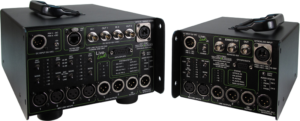
Live-Link Remote Camera Interface System: Designed to handle news, sports, and other day-to-day remote interfacing needs with ease, Live-Link offers an advanced portable, single-mode optical interface for ENG and OB vans, SNG vehicles, and production trailers. Features include two 3G/HD/SD-SDI video paths in each direction, on-air and cue audio, intercom, and Ethernet data. Uses four single-mode fibers and models are available with a variety of optical connectors. Live-Link is an ideal infrastructure solution for airports, studio complexes, arenas, and campus environments. | |
![]() |
Live-Link Jr. Remote Camera Interface System: Optimized for ENG and uplink vehicles, Live-Link Jr. provides everything needed for a single-camera live event. Features include one 3G/HD/SD-SDI video path in each direction, on-air and cue audio, integrated end-to-end party-line intercom system, and 4-wire intercom interfacing. Camera end and truck end units interconnect using two strands of single-mode fiber. Camera End Unit allows remote powering using hybrid fiber/copper cable. | |
![]() |
Model 400 SDI-Over-Fiber Transport System: This single rack-space system is a high-performance, cost-effective solution for distributing digital video signals over short and medium distances. The system is compatible with all common broadcast serial digital video formats (3G/HD/SD-SDI and DVB-ASI) and is suitable for remote trucks, live-event video distribution, and fixed links between production centers and remote sites. A variety of input and output configurations are available. | |
![]() |
Model 410 SDI-Over-Fiber Transport System: This "throw-down" or half-rack-space system is a high-performance, cost-effective solution for distributing digital video signals over short and medium distances. The system is compatible with all common broadcast serial digital video formats and is suitable for use in remote trucks, live-event video distribution, and fixed links associated with broadcast and production facilities. Three Model 410 versions are available, providing a range of input and output configurations. | |
| Broadcast Support | ||
![]() |
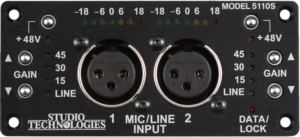
Model 5110 Mic/Line Input Module: Compact module designed for use in custom audio applications. Features include two mic/line-level inputs, adjustable gain, +48 V phantom power, and LED metering. Balanced analog and unbalanced digital audio outputs. Versions available for compatibility with SMPTE® and EBU analog and digital audio reference levels. | |
![]() |
Model 5120 Line/IFB Output Module: Compact module designed for use in custom audio applications. Features include two balanced line-level outputs, a 2-channel "wet" (+28 Vdc with audio) IFB output, and LED metering. Balanced analog and unbalanced digital audio inputs. Versions available for compatibility with SMPTE and EBU analog and digital audio reference levels. | |
![]() |
Model 5121 Line/IFB Output Module: Compact module designed for use in custom audio applications. Features include two balanced line-level outputs, a 2-channel "wet" (+28 Vdc with audio) IFB output, and LED metering, and remote monitoring capability. Balanced analog and unbalanced digital audio inputs. Versions available for compatibility with SMPTE and EBU analog and digital audio reference levels. | |
![]() |
Model 5130 Party-Line Interface Module: Compact module designed for use in custom audio applications. Features include a 2-channel "wet" (+28 Vdc with audio) party-line (PL) intercom output, 2-wire-to-4-wire conversion with auto-nulling, and LED metering. Analog and digital audio inputs and outputs provided for interfacing with 4-wire equipment. Versions available for compatibility with SMPTE and EBU analog and digital audio reference levels. | |
![]() |
Model 5132 Party-Line Interface Module: Compact module designed for use in custom audio applications. Features include a 2-channel "wet" (+28 Vdc with audio) party-line (PL) intercom output, 2-wire-to-4-wire conversion with auto-nulling, and LED metering. A selectable operating mode allows the module to either provide party-line (PL) power or be connected to an external intercom power supply. Analog and digital audio inputs and outputs provided for interfacing with 4-wire equipment. Versions available for compatibility with SMPTE and EBU analog and digital audio reference levels. | |
| Mobile Broadcast | ||
![]() |
IFB Plus Model 2 Central Controller: This single rack-space unit contains all the circuitry to implement a sophisticated 2-channel IFB system for electronic news gathering (ENG) and outside broadcast (OB) vans, satellite news gathering (SNG) vehicles, and mobile production facilities. Interruptible foldback (also known as talent cueing) allows reporters and other on-air talent to receive program audio along with audio cues from production personnel, generally directors and producers. | |
![]() |
IFB Plus Model 22 and Model 24 Access Stations: Used to access the Model 2's IFB channels, the Model 22 is installed at producer or director locations. Up to four Model 22s can be connected to, and powered by, a Model 2 Central Controller. The Model 24 is installed with two Model 2s to create a 4-channel IFB system, providing producer or director locations with access to IFB channels. Includes five pushbutton switches, one for each IFB channel and "all-call." Up to four Model 24s can be connected to, and powered by, two Model 2 units. Unit are normally installed with a Model 11A Gooseneck Microphone and Model 25A or 27A 19-inch rack adapter. | |
![]() |
IFB Plus Model 32A and Model 33A Talent Amplifiers: Self-contained amplifier modules designed for use by talent or production personnel. A channel selector switch, along with level control, allows either IFB channel to drive a talent earpiece or headset. A combination of up to four Model 32A or Model 33A units can be supported by the Model 2. | |
![]() |
Model 742 Audio Mixer: Designed for use in ENG vehicles and various general audio applications, this single rack-space unit features four mic/line inputs, four line inputs, two audio buses, two 10-segment LED level meters, and a monitor section. | |
| Intercom and IFB | ||
![]() |
Model 41 Line-Level Audio to IFB Circuit Interface: Optimized for "broadcast booth" and semi-portable applications, this advanced single rack-space unit is specifically designed to link matrix intercom systems with IFB-compatible beltpacks and announcer's consoles. The unit has four independent channels that create industry-standard IFB circuits, each supplying a 30 volt DC power feed and two audio channels. Features include back-panel IFB output connectors, dual LED level meters, and a headphone output to allow sophisticated monitoring of audio and DC signals associated with IFB circuits. | |
![]() |
Model 42A Line-Level Audio to IFB Circuit Interface: Optimized for "broadcast booth" and semi-portable applications, this advanced single rack-space unit is specifically designed to link matrix intercom systems with IFB-compatible beltpacks and announcer's consoles. The unit has four independent channels that create industry-standard IFB circuits, each supplying a 30 volt DC power feed and two audio channels. Features include front- and back-panel IFB output connectors, dual LED level meters, and a headphone output to allow sophisticated monitoring of audio and DC signals associated with IFB circuits. | |
![]() |
Model 45A 2-Wire to 4-Wire Interface: Designed to interface a 2-wire full-duplex party-line intercom circuit with a 4-wire audio circuit associated with a matrix intercom system. Other specialized audio system interfacing applications can also be supported. Applications include television sports and special event broadcasting, theme park and theater installations, corporate events, and industrial testing environments. | |
![]() |
Model 46 Dual 2-Wire to 4-Wire Interface: A single rack-space unit that interfaces 2-wire full-duplex party-line intercom circuits with 4-wire audio circuits associated with matrix intercom systems. The unit provides two independent full-featured 2-channel interfaces each with automatic nulling capability. Applications include television sports and special-event broadcasting, theme park and theater installations, corporate events, and industrial testing environments. | |
![]() |
Model 47 Dual 2-Wire to 4-Wire Interface: A single rack-space unit that interfaces 2-wire full-duplex party-line intercom circuits with 4-wire audio circuits associated with matrix intercom systems. The unit provides two independent 2-wire interfaces with auto-nulling capability. Each interface also provides independent power sources for both channels of party-line intercom circuit. Applications include television sports and special-event broadcasting, theme park and theater installations, corporate events, and industrial testing environments. | |
![]() |
Model 72 Level Meter / Interface: This compact, portable unit "strips" audio from single- and dual-channel intercom and IFB circuits. The unit is used for numerous broadcast and production applications, as well as serving as a troubleshooting and maintenance aid. The Model 72 is powered by an intercom or IFB line. | |
![]() |
Model 34 Talent Amplifier: A self-contained amplifier module designed for use with single- or 2-channel IFB systems, the Model 34 features dual level controls, a mono/stereo switch, and both ¼-inch and 3.5 mm output jacks. The unit can be used with Models 41 or 42A Interfaces. These units are fully compatible with industry-standard RTS® 4000-Series IFB systems. | |
![]() |
Model 36 Talent Interface: A combination self-contained headset/earpiece amplifier and microphone routing module. The unit is powered by a standard IFB circuit, including those provided by Studio Technologies' Models 41 or 42A Interfaces. | |
![]() |
Model 37 Intercom Beltpack: A self-contained unit designed for use by on-air, production, or engineering personnel. Directly compatible with 4-wire matrix intercom systems or standard analog audio circuits. Supports single- and dual-muff headsets that utilize dynamic microphones. | |
| Announcer's Consoles | ||
![]() |
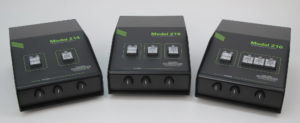
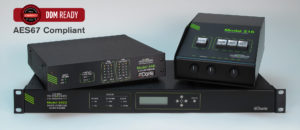
Model 210 Announcer's Console: An advanced unit suitable for a variety of applications, including on-air television sports broadcasting. Features include an IFB input and single talkback output. Many configurable features are contained in this compact tabletop unit. | |
![]() |
Model 212 Announcer's Console: This digital audio version supports a variety of applications, including on-air television and radio broadcasting, voice-over booths, and stadium announcement. The compact tabletop unit provides excellent audio quality and includes many configurable operating parameters. Features include AES3id (unbalanced coax) digital inputs and outputs, a bidirectional digital interface, and optional AES3 (balanced) digital inputs and outputs. | |
![]() |
Model 220 Announcer's Console: An enhanced unit that supports a variety of applications, including on-air television and radio broadcasting. Features include an IFB input, two line-level audio inputs, and two talkback outputs. The tabletop unit includes numerous configurable parameters and resources. | |
![]() |
Model 230 Announcer's Console: This feature-rich unit supports numerous applications, including on-air television and radio broadcasting, stadium announcement, and live-event production. Resources include an IFB input, two line-level audio inputs, a sophisticated dual-channel intercom interface, and a single line-level audio talkback output. The tabletop unit includes extensive configurable parameters and excellent audio performance throughout. | |
![]() |
Model 233 Announcer's Console: This high-performance unit supports specialized applications such as stadium announcement and live-event production. Available resources include an integrated sidetone section, two line-level audio talkback outputs, two line-level audio inputs, a sophisticated dual-channel intercom interface, and a tally output. The tabletop unit provides great audio performance, numerous user features, and excellent audio performance. | |
![]() |
Model 44 Interface: Designed to work with 200-Series Announcer's Consoles, the unit serves as an interconnection "hub," providing power and signal routing for up to six announcer's consoles. Appropriate for in-studio as well as field broadcast applications. Of special note is its applicability for use in the live television sports industry. | |
| StudioComm Loudspeaker Monitor Control Systems | ||
![]() |
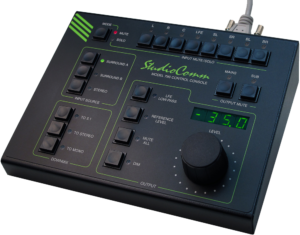
5.1 Surround: Digital In/Analog Out StudioComm 76/77 Surround Monitoring System: A surround monitoring system with digital input and analog output capability. Features include two surround (5.1) inputs, three stereo inputs, one surround (5.1) monitor output, and one stereo monitor output. All inputs are AES3id compatible (unbalanced, BNC connectors); outputs are electronically balanced analog. One Model 76 Central Controller supports a combination of up to four Model 77 or Model 71 Control Consoles. |
|
![]() |
5.1 Surround: Digital In/Analog Out StudioComm 76B/77B Surround Monitoring System: This surround monitoring system is optimized for broadcast post-production and master control applications. Features include digital input and analog output capability along with Dolby E metadata dialnorm display and response. Allows connection and flexible routing of two surround (5.1) inputs, three stereo inputs, one surround (5.1) output, and one stereo auxiliary output. All inputs are AES3id compatible (unbalanced, BNC connectors); outputs are electronically balanced analog. One Model 76B Central Controller supports a combination of up to four Model 77B or Model 71 Control Consoles. |
|
![]() |
5.1 Surround: Digital In/Digital Out StudioComm 76D/77 Surround Monitoring System: An all-digital surround monitoring system that includes two surround (5.1) inputs, three stereo inputs, one surround (5.1) monitor output, and one stereo output. All inputs are AES3id compatible (unbalanced, 75 ohms); outputs are software-selectable for compatibility with AES3 (balanced, 110 ohms) or AES3id (unbalanced, 75 ohms). Highlights include configurable input-to-output delay for synchronizing audio with video displays. One Model 76D Central Controller supports a combination of up to four Model 77 or Model 71 Control Consoles. |
|
![]() |
5.1 Surround: Digital In/Digital & Analog Out StudioComm 76DA/77 Surround Monitoring System: Surround monitoring system with digital inputs and both digital and analog outputs. Features include two surround (5.1) and three stereo unbalanced digital inputs, two digital and one analog surround (5.1) monitor outputs, and two digital and one analog stereo monitor outputs. One Model 76DA can support a combination of up to four Model 77 or Model 71 Control Consoles. |
|
![]() |
5.1 Surround: Digital In/Digital Out StudioComm 76DB/77B Surround Monitoring System: This all-digital surround monitoring system is optimized for broadcast post-production and master control applications. The system allows connection and flexible routing of two surround (5.1) inputs, three stereo inputs, one surround (5.1) monitor output, and one stereo auxiliary output. All inputs are AES3id compatible (unbalanced, 75 ohms); outputs are software-selectable for compatibility with AES3 (balanced, 110 ohms) or AES3id (unbalanced, 75 ohms). Features include Dolby® E metadata dialnorm display and response, and configurable input-to-output delay for synchronizing audio with video displays. One Model 76DB Central Controller supports a combination of up to four Model 77B or Model 71 Control Consoles. |
|
![]() |
5.1 Surround: Digital In/Digital & Analog Out StudioComm 76DBA/77B Surround Monitoring System: Surround monitoring system optimized for broadcast post-production and master control applications. The system allows connection, flexible routing, and time delay of two surround (5.1) inputs and three stereo unbalanced digital inputs. Provides two digital and one analog surround (5.1) monitor outputs and two digital and one analog stereo auxiliary outputs. All inputs are AES3id compatible (unbalanced, 75 ohms); outputs are software-selectable for compatibility with AES3 (balanced, 110 ohms) or AES3id (unbalanced, 75 ohms). Features include Dolby® E metadata dialnorm display and response, and configurable input-to-output delay for synchronizing audio with video displays. One Model 76DBA Central Controller supports a combination of up to four Model 77B or Model 71 Control Consoles. |
|
![]() |
Compact Control Console Model 71 Control Console: A compact "command center" for use with Models 76, 76B, 76D, 76DA, 76DB, or 76DBA Central Controllers. Provides additional user locations with the most frequently desired functions: level adjustment, reference level, and dim. Up to three Model 71s can be connected to, and powered by, a central controller. |
|
![]() |
7.1 Surround Analog In/Analog Out StudioComm 78/79 Surround Monitoring System: Designed for 7.1 surround monitoring applications, this system supports two 7.1 inputs and one 7.1 monitor output. Includes features such as –12 dBV to +6 dBu input levels, extensive downmix capability, and integrated bass management. THX® pm3 approved. |
|
![]() |
5.1 Surround: Analog In/Analog Out StudioComm 74/75 Surround Monitoring System with Talkback: This system is designed for advanced 5.1 surround monitoring applications. Features include two 5.1 and two stereo inputs, two 5.1 monitor outputs, and an integrated headphone cue ("talkback") system. Allows connection of up to four Model 35 Talent Amplifiers. |
|
![]() |
5.1 Surround: Analog In/Analog Out StudioComm 68A/69A Surround Monitoring System: Designed for 5.1 surround monitoring applications, this system supports two 5.1 and two stereo inputs, and one 5.1 and one stereo monitor output. Includes features such as –12 dBV to +6 dBu input levels, downmix, and mono. |
|
![]() |
Stereo: Analog In/Analog Out StudioComm 55/56 Stereo Monitoring System with Talkback: This monitoring system features four stereo inputs, one control room output, a dub (copy) output, and two communications functions. Allows connection of up to four Model 35 Talent Amplifiers. |
|
![]() |
Talent Amplifier Model 35 Talent Amplifier: This portable amplifier module drives one or two pairs of headphones. Connects to Model 55 and Model 74 Central Controllers; up to four Model 35s per unit. |
|
| Distribution Amplifiers | ||
![]() |
Analog Model 81 Stereo Analog Audio Distribution Amplifier: An analog distribution amplifier with one stereo input and eight stereo outputs. The inputs use 3-pin XLR-type connectors; two 25-pin D-subminiature connectors are used with the outputs. Features ExactCal input calibration system, balanced inputs and outputs, and sonic excellence. |
|
![]() |
Analog Model 82 Stereo Analog Audio Distribution Amplifier: An analog distribution amplifier with one stereo input and four stereo outputs. All inputs and outputs use 3-pin XLR-type connectors. Features ExactCal input calibration system, balanced inputs and outputs, and sonic excellence. |
|
![]() |
Digital Model 85 AES / EBU Digital Audio Distribution Amplifier: A digital distribution amplifier with two AES/EBU digital inputs and eight AES/EBU digital outputs. Allows AES/EBU signals to be distributed to multiple inputs (receivers) without incurring data transmission errors. |
|
| Cable Tester | ||
![]() |
DT12 Model 92: Designed to test the electrical integrity of broadcast-standard DT12-type cable assemblies and fanouts. Complete testing is done in less than six seconds. |
|
| Sound Pressure Level Monitoring Systems | ||
![]() |
SPLnet Model 100: Provides a unique and powerful set of tools to measure, calculate, display, report, and respond to sound levels. Allows temperature-only or temperature and humidity modules to be connected. Power-over-Ethernet (PoE) powered. Operating power is provided by a PoE-compatible Ethernet port.The Model 100 is ideally suited for entertainment-related and commercial measurement and level compliance applications. | |
![]() |
SPLnet Model 112: A networked sound level management system and the ideal solution for professionals who need to cost effectively monitor and manage sound, noise, temperature/relative humidity, and wind speed/direction in entertainment, commercial, and industrial applications. Requires a separate DC (10 to 18 V range) power supply. | |
| Reference Archive for Discontinued Products | ||